
Subscribe to our newsletter
One short email when we publish. No spam, unsubscribe anytime.
Deploy Smarter Voice AI: What GPT-Realtime-2 Means for Your Agents
OpenAI's GPT-Realtime-2 Closes the Gap Between Voice AI and Real Conversations
OpenAI has released GPT-Realtime-2, a new voice model designed to reason through requests, call external tools, and handle interruptions without dropping the thread of a conversation. For anyone building or using AI voice agents today, this is a meaningful step up from the previous generation.
What Is GPT-Realtime-2?
The previous realtime voice model, GPT-Realtime-1.5, handled live speech but struggled with the kind of multi-step reasoning that real customer interactions demand. GPT-Realtime-2 is built specifically to keep a voice conversation moving while the model is still working on an answer.
The most practical change is preamble support: the model can say things like "let me check that" or "one moment while I look into it" before delivering a response. This sounds trivial, but it solves a real problem. Silence during processing makes users assume the call has dropped or the agent has failed. Short verbal acknowledgements keep the interaction natural.
Parallel Tool Calls and Transparent Actions
GPT-Realtime-2 can now call multiple tools at the same time, similar to how a skilled call-centre agent can check a database while simultaneously pulling up an account record. More importantly, it can narrate those actions out loud: "checking your calendar" or "looking that up now." Users stay informed instead of waiting in silence.
The model also handles failures more gracefully. Rather than going quiet or producing a garbled response when a tool call fails, it can say something like "I'm having trouble with that right now" and continue the conversation. That kind of recovery behaviour is the difference between an agent that feels broken and one that feels like a bad day at work.
Bigger Context Window and Stronger Vocabulary Retention
The context window, which is the amount of conversation the model can hold in memory at once (think of it as short-term memory for the AI), has grown from 32,000 tokens to 128,000 tokens. That is a four-fold increase, and it matters for longer support calls, complex multi-step workflows, and conversations that reference earlier parts of the session.
The model also does a better job retaining specialised vocabulary: medical terms, product names, industry jargon. In production voice settings, where a model mishearing "metformin" as something phonetically similar can cause real problems, this is not a minor improvement.
Adjustable Reasoning Effort
Developers can now tune reasoning effort on a five-level scale: minimal, low, medium, high, and xhigh. The default is low, which prioritises speed for simple back-and-forth interactions. High and xhigh are intended for complex requests where accuracy matters more than response time.
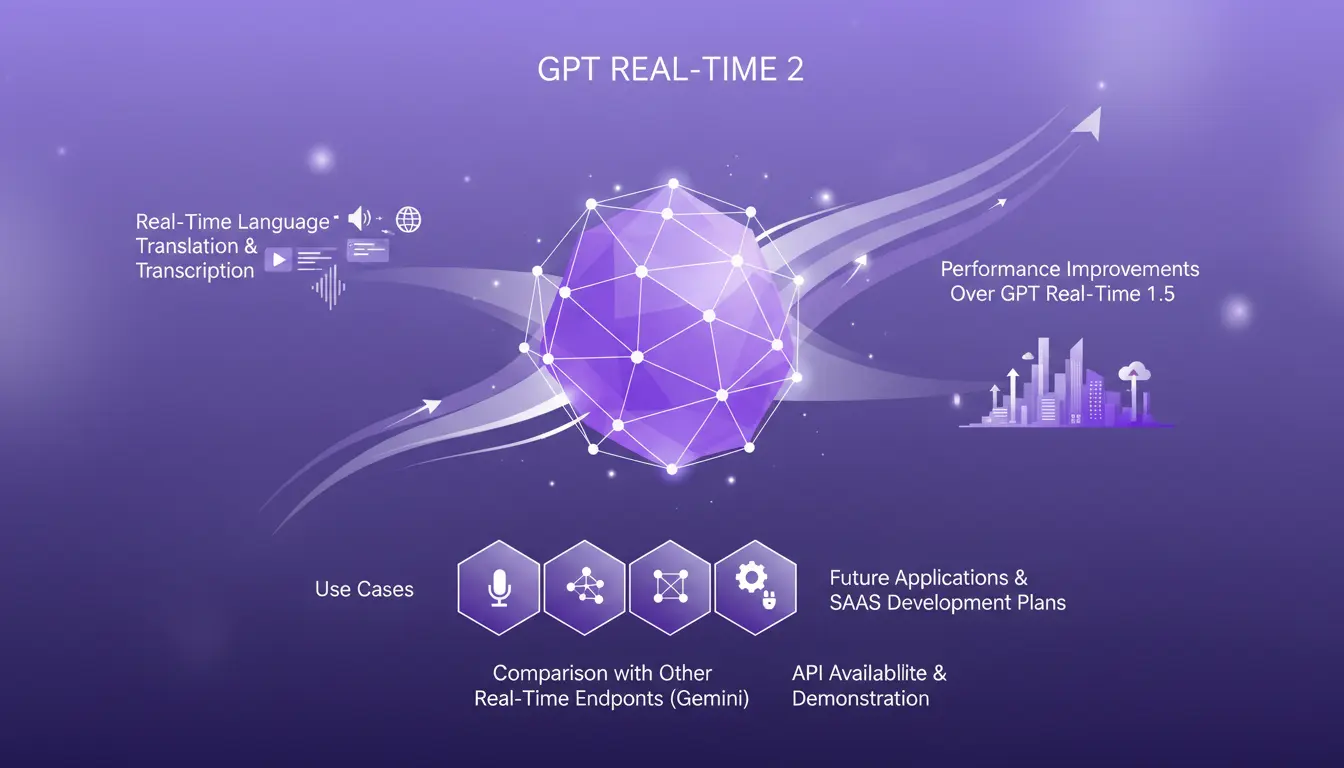
This is a meaningful control. A voice bot answering "what are your store hours?" does not need the same processing depth as one walking a patient through medication instructions. Tiered reasoning lets developers match compute to complexity rather than paying for headroom they rarely use.
How Much Better Is It? What the Numbers Say
According to OpenAI's own evaluation, GPT-Realtime-2 at high reasoning scores 15.2 percent higher than GPT-Realtime-1.5 on Big Bench Audio, a benchmark that tests challenging reasoning in audio-input language models. At xhigh reasoning, it scores 13.8 percent higher on Audio MultiChallenge, which tests multi-turn conversational intelligence including instruction following, context integration, and handling speech corrections mid-sentence.
These figures come from OpenAI's internal benchmarks and have not been independently verified by a third party. They should be read as directional signals, not as absolute performance guarantees. Real-world results will depend on the specific use case, the quality of audio input, and how the model is configured.
What We Do Not Know Yet
OpenAI's announcement page does not include pricing for GPT-Realtime-2 API access relative to GPT-Realtime-1.5, nor a confirmed general availability date or rollout timeline. The source material also references early-testing business use cases but does not provide specific examples or customer names. Until OpenAI publishes that detail, it is not possible to report meaningfully on real-world deployments.
What This Means for You
If you are currently running a voice agent on GPT-Realtime-1.5, the context window increase alone is worth evaluating: sessions that were hitting memory limits should run more coherently on the new model. The preamble and tool-transparency features require no extra configuration on your end once the model is available through the API.
If you are pricing out a new voice agent build, hold off on finalising cost projections until OpenAI publishes GPT-Realtime-2 pricing. The adjustable reasoning tiers suggest the model may be billed differently depending on the effort level selected, but that is not confirmed.
If you work in healthcare or any domain with specialised vocabulary, the improved terminology retention is worth testing directly against your actual transcripts before committing to a production rollout. Self-reported benchmarks are a starting point, not a deployment decision.
Source: openai.com

Helpful documentation
Want your own AI agent running without the setup? We host it on a dedicated EU server. Free for 7 days, no credit card.
Start your free trialGet notified when we publish new articles
No spam, unsubscribe anytime.
By subscribing, you agree to our Privacy Policy.