
Subscribe to our newsletter
One short email when we publish. No spam, unsubscribe anytime.
How OpenClaw Got 5x Faster and 60% Smaller Without Losing Features
OpenClaw Got Faster and Smaller at the Same Time
OpenClaw, the open-source agent tool, spent the spring shrinking instead of growing. Between mid-April and late May, a cold start (the time from your first request to the agent's first real action) fell from 9.8 seconds to 1.9 seconds, about five times faster. Over the same window, the installed package got 59 percent smaller and shipped with roughly half as many bundled bits of third-party code.
That is unusual. Most software gets heavier as it gets more popular, picking up features and the extra baggage that comes with them until simple actions feel slow. OpenClaw went the other way while still adding capabilities, and the way the team did it is worth a closer look.
The Numbers
According to a release performance review published by the OpenClaw Foundation in late May, the headline figures across the spring releases are:
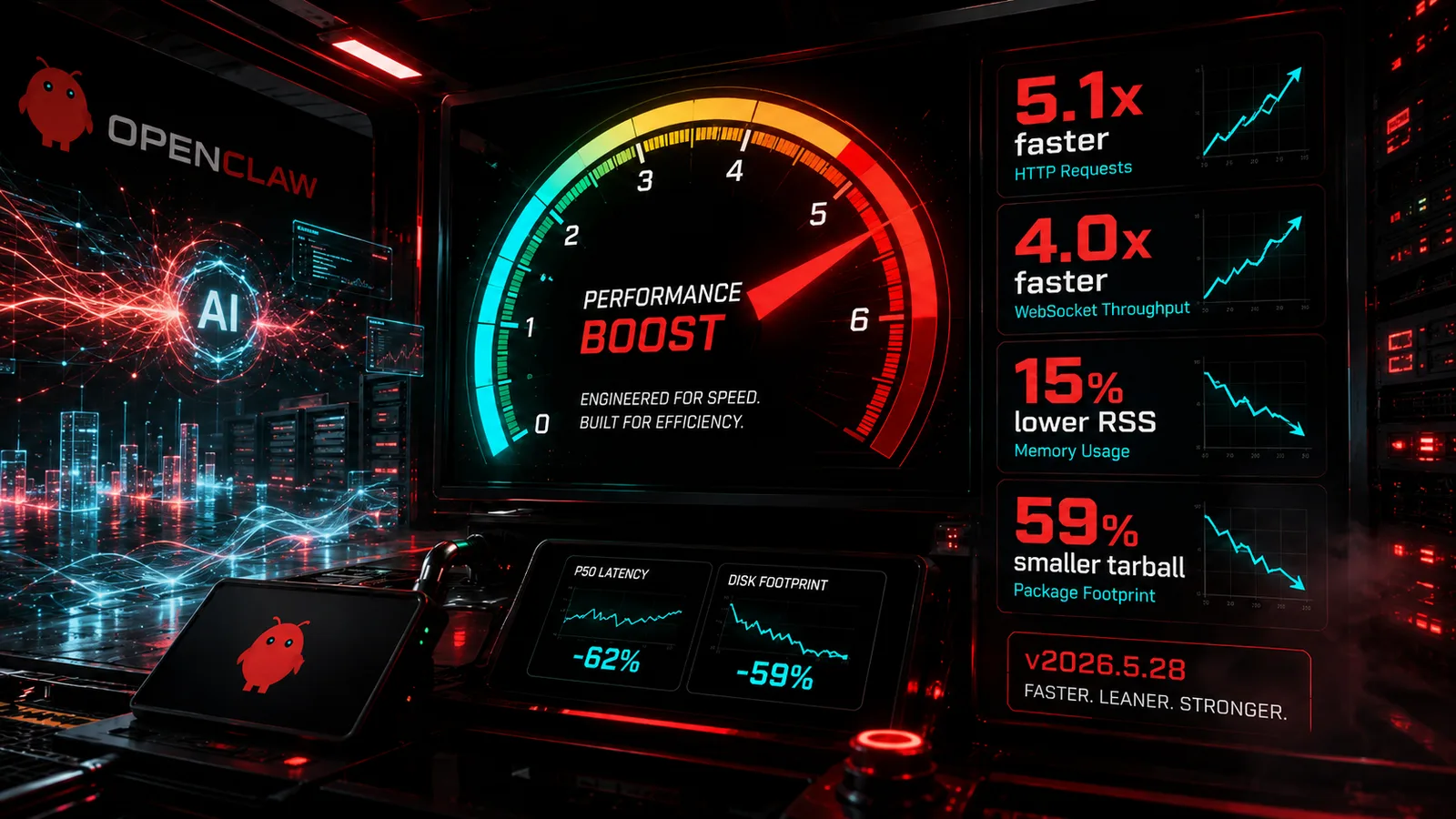
- Cold start: 9.8 seconds down to 1.9 seconds, about 5.1 times faster.
- Warm start (when the tool is already running): 7.5 seconds down to 1.9 seconds, four times faster.
- Peak memory use: 686 MB down to 581 MB, a 15 percent drop.
- Published download size: 43.3 MB at the end of March down to 17.9 MB by late May.
- Bundled third-party packages: 645 in late February down to 300 in the latest release.
The trend on cold starts is the cleanest part of the story. Across four releases the time fell from 9.8 seconds, to 7.2, to 2.2, to 1.9. Each step looks like a deliberate decision rather than a lucky accident.
How They Did It: Moving Weight Into Plugins
For a stretch of February and March, the package actually grew. The unpacked install more than doubled in size as the team added new features: more service connectors, media handling, memory, and a kit for building plugins. Then the direction reversed.
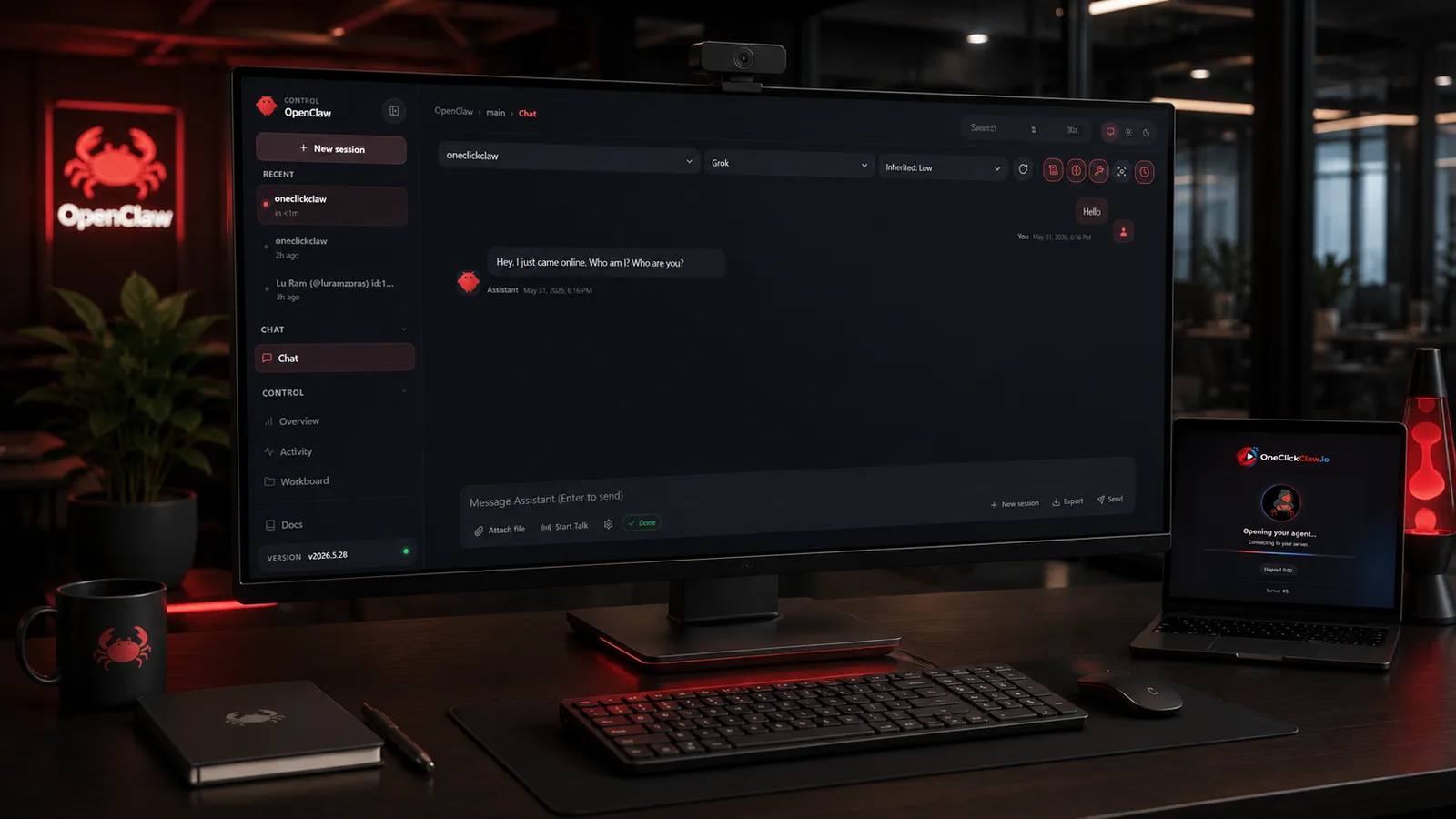
Starting with version 2026.5.12, the team began pulling heavier optional pieces out of the core install. Integrations for Bedrock, Slack, OpenShell, Anthropic Vertex, Matrix, and WhatsApp moved into plugins. The logic is simple: if you do not use the Slack connector, you should not have to download and audit it. Capability you need stays one install away. Capability you do not need stops weighing down everyone else.
The team's own report described this as "molting rather than adding," which is a fair description of what the numbers show.
The Messy Parts, Published Out Loud
The path was not clean. In version 2026.5.22, a change to how the tool locks down its dependency list (a file called a shrinkwrap, which pins exact versions of every bundled package) accidentally bloated a fresh install past one gigabyte. A week later, version 2026.5.28 cut most of that duplicate weight: a nested copy fell from 656 MB to 260 MB, and the overall fresh install came down to about 362 MB.
The team published the stumble in the same report as the wins. They also wrote, plainly, that the duplicate tree is "still not fully gone." That kind of honesty is rare in release notes, which usually read like sales copy.
The report is also careful about how much weight to put on its own numbers. The performance rows come from repeated test runs against a mock service provider (a stand-in that simulates a real AI backend without calling one), and the team notes these are "useful for spotting large shifts, not for pretending every millisecond is a benchmark law." Whether those mock conditions match real workloads with live models and real network latency is a fair open question the report does not fully answer.
Why Speed and Size Matter Beyond Bragging Rights
It is easy to read "1.9 seconds" as a vanity stat. It is more than that.
When a tool answers in under two seconds, you start asking it small questions you would not bother asking a slow tool. It moves from "thing I open when I have to" to "thing I reach for without thinking." Past a certain speed threshold, the relationship between the user and the tool changes.
Smaller installs matter for a quieter reason. Fewer bundled packages means a smaller surface for security problems, faster audits, and fewer late-night moments where some buried dependency turns out to be the cause of a strange bug. Three hundred packages are easier to reason about than six hundred and forty-five. For anyone running this kind of tool inside a business, that difference is the difference between "we can vouch for what is on our machines" and "we hope it is fine."
A Direction, Not Just a Release
The single release is less interesting than the stated approach behind it: keep the core small, push optional features into plugins, be explicit about which dependencies are whose responsibility, and measure the effects users actually feel. If that approach holds across the next few quarters, it points toward a healthier pattern for the whole category of agent tools.
A few details the report does not settle: it credits the work to Peter Steinberger without explaining his role, and it refers to the "OpenClaw Foundation" without clarifying how that body relates to the openclaw.ai product. Those are worth knowing before treating any single quarter's report as the last word.
What This Means for You
If you are evaluating agent tools for your work, do not just count features. Try three checks on any tool you are considering:
- Time the cold start yourself. Close the tool, reopen it, ask it something simple, and count seconds. Under two seconds changes how you use it. Over five seconds, you will use it less than you think.
- Look at install size and dependency count over the last few releases. Tools getting lighter over time are unusual and are usually run by teams who care about long-term maintenance. Tools getting steadily heavier rarely reverse course.
- Read the release notes for honesty. If the team admits stumbles in writing and tells you how much to trust their own benchmarks, that is a stronger signal than any single number on a landing page.
Speed and size are not the whole story. But they are the parts of the story that determine whether you will actually keep using the thing six months from now.
Helpful documentation
Want your own AI agent running without the setup? We host it on a dedicated EU server. Free for 7 days, no credit card.
Start your free trialGet notified when we publish new articles
No spam, unsubscribe anytime.
By subscribing, you agree to our Privacy Policy.