
Subscribe to our newsletter
One short email when we publish. No spam, unsubscribe anytime.
OpenClaw Enterprise, explained: Kubernetes for agents
The OpenClaw Foundation published a 22-minute video on the 23rd of October 2026 in which Kevin Lin, who leads OpenClaw Enterprise at OpenAI, explains the project to Graham McBain of the Foundation. OpenClaw Enterprise is a free, open source platform for running OpenClaw agents inside a company with fixed limits, logs and permissions. It was announced on the 29th of September 2026, the day of OpenAI's DevDay, started inside OpenAI and was donated to the Foundation.
The project's own page on GitHub sums it up in one line: "Think of it as Kubernetes for agents." Kubernetes is the system most large companies use to run their software across many servers at once. The comparison says what the project wants to be: the standard layer under every company's agents, whoever makes the agents and wherever they run.
Agents are banned in most companies because nobody can fix their walls, Lin said
Security comes up on "basically every single enterprise call", Lin said in the video. The problem, in his words, is that agents are "undeterministic": they go to great lengths to reach a goal, and a company cannot promise in advance what they will do.
The question a company asks is a different one, he said: can it enforce what the agent cannot do. His examples were an agent with email that must never write to someone outside the company, and an agent that must never show sensitive data to a person without access to it.
Without that guarantee the default answer is a ban. "That's why agents are banned everywhere," Lin said. In the launch post he wrote the same thing in calmer words: the default stance of IT in most organisations is to ban agent platforms like OpenClaw altogether. The Register's Simon Sharwood noted on the 30th of September 2026 that Gartner had called OpenClaw an "unacceptable cybersecurity risk" for business users back in February.
The core design: a locked control plane and sealed sandboxes
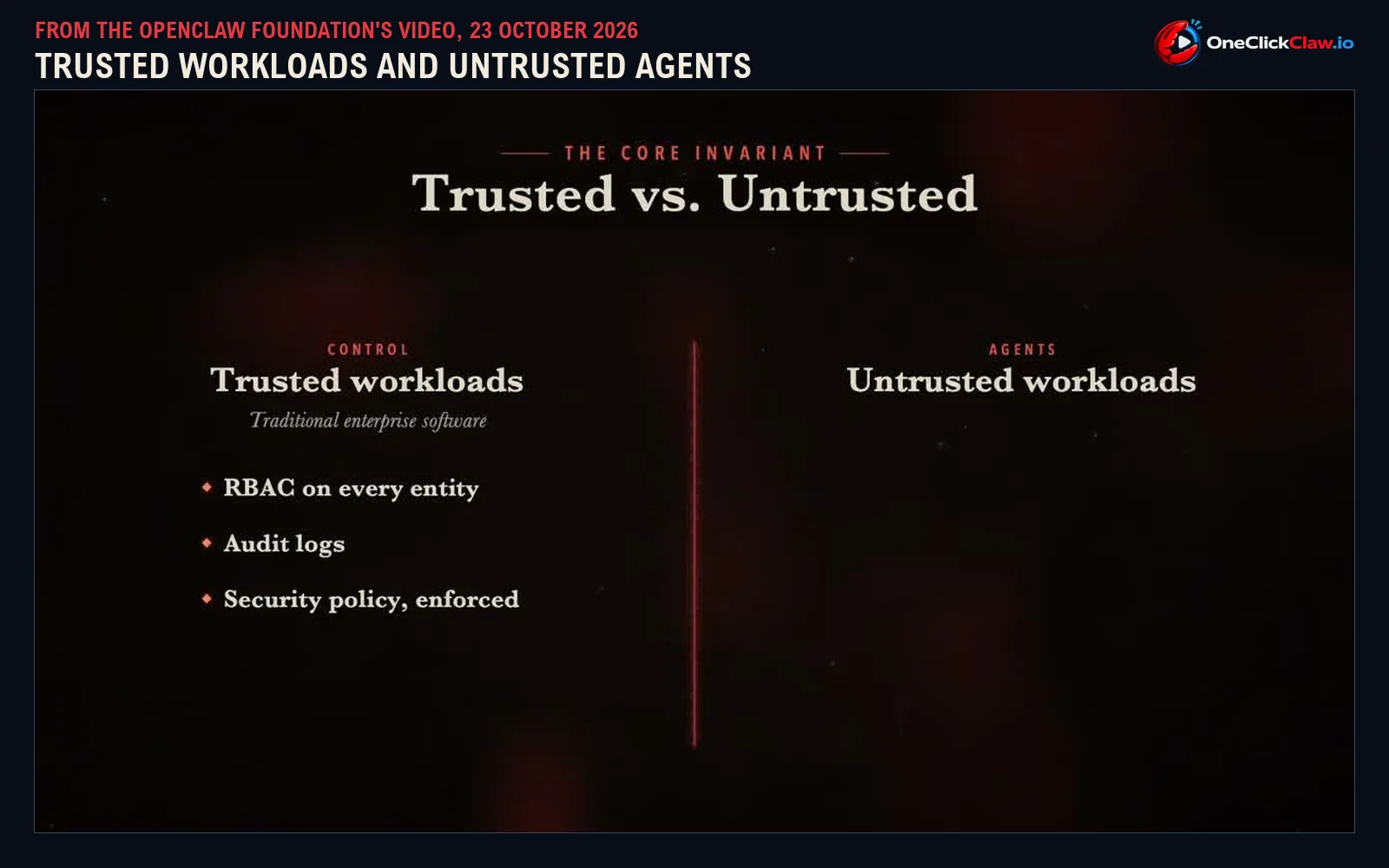
OpenClaw Enterprise splits the work into two kinds of workload, Lin said. Trusted workloads are "your traditional boring enterprise software": role-based access on every object, audit logs, and a security policy that is enforced. Untrusted workloads are the agents themselves, each with its tools, doing whatever it decides inside its box.
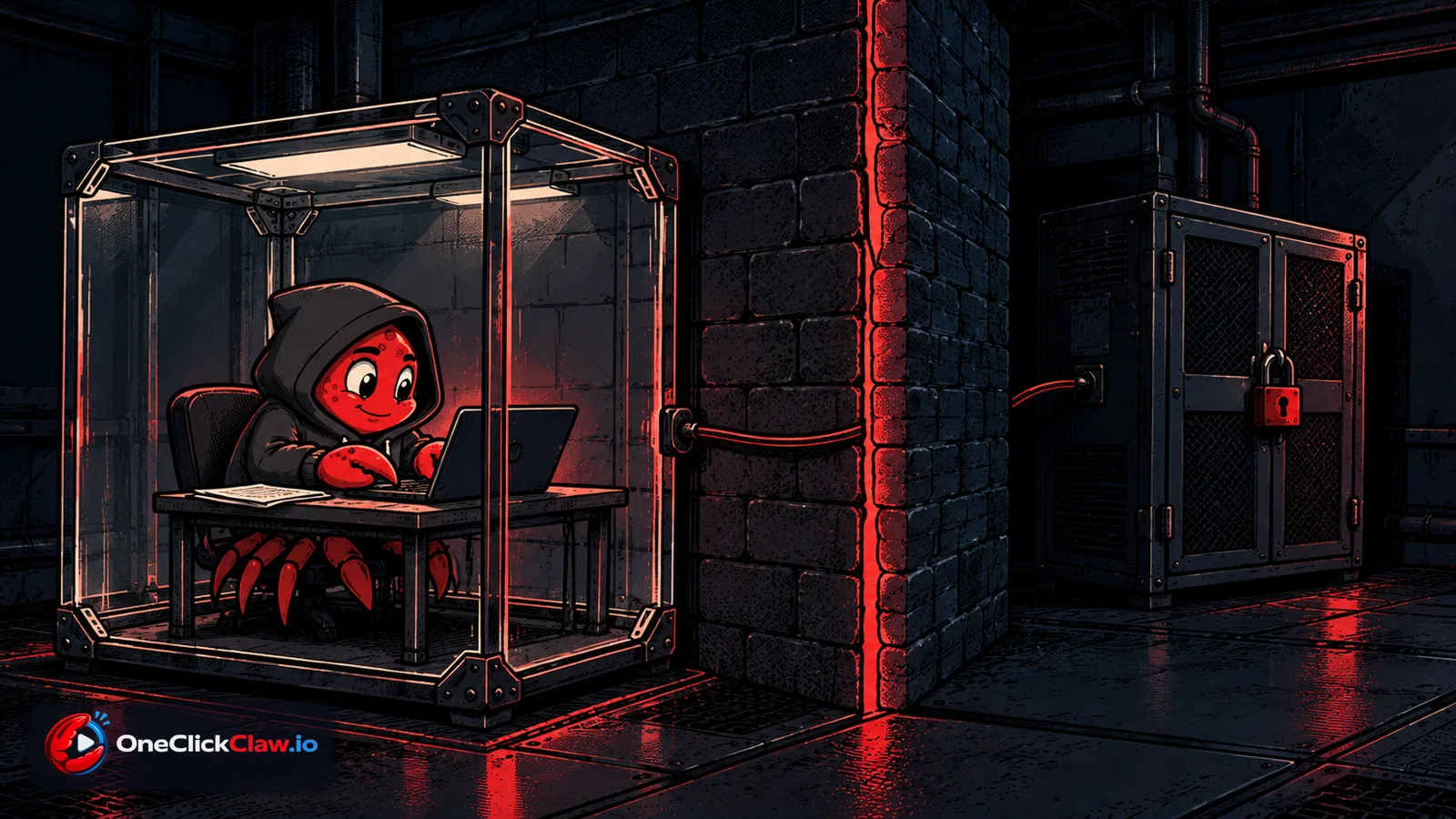
The trusted part is the control plane. It provisions each agent, holds its configuration and its runtime settings, and chooses its sandbox. It runs in a separate isolation boundary from the agents, by default a different container. "At OpenAI we actually got it in completely different clusters," Lin said.
The point, he said, is that whatever boundaries an operator sets on an agent, the agent cannot reach them or overwrite them. Everything else is built on that. The concepts page in the documentation adds the detail: every agent gets its own service identity, it never inherits the permissions of the person who created it, and roles, access bindings and restrictions decide what each identity may touch.
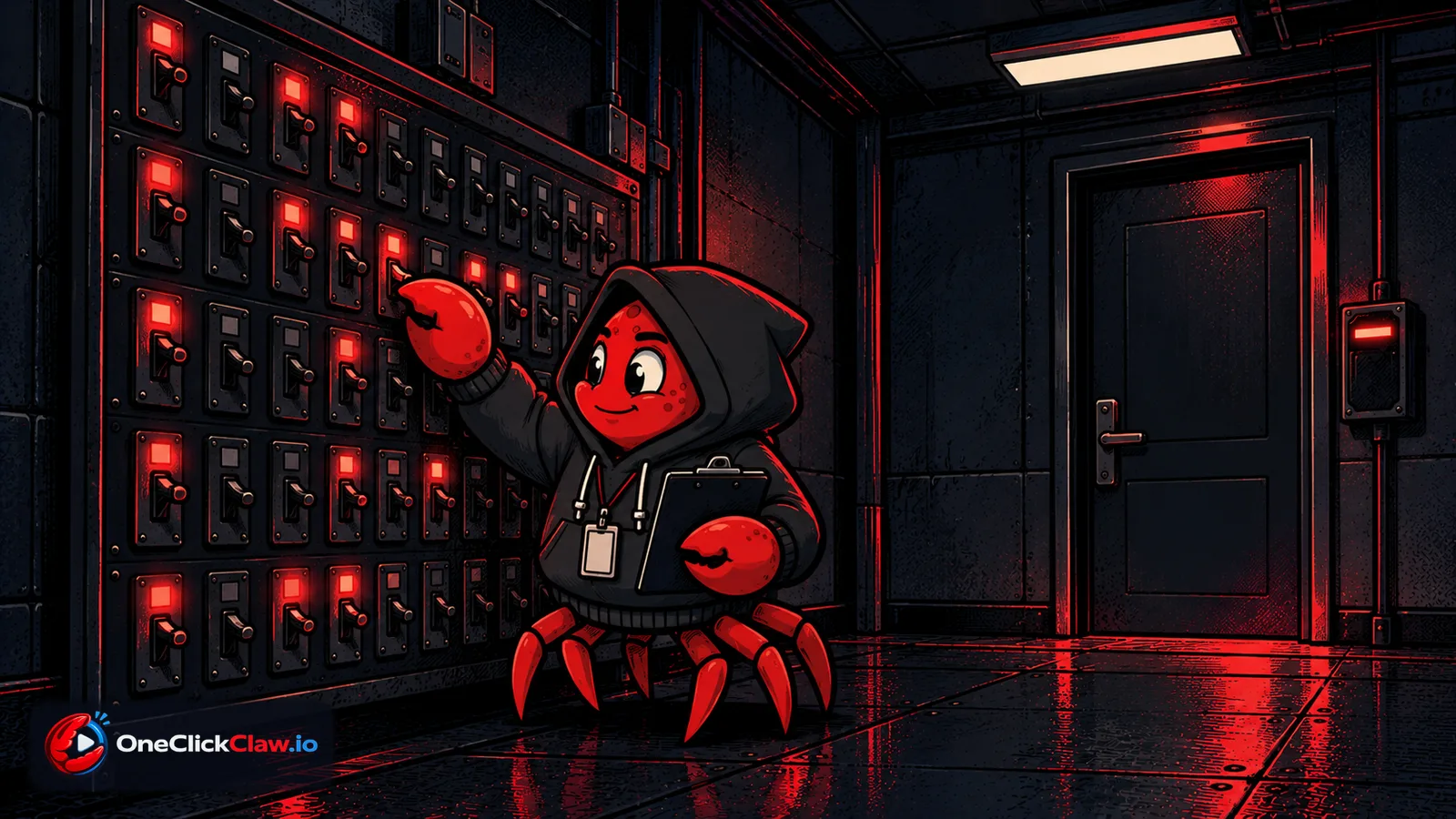
A plain way to picture it: the agent works inside a sealed glass box, and the rules, the log and the keys live in a locked room next door. The agent can see the rules apply to it. It cannot walk into the room.
It runs on Kubernetes or on plain Linux servers over SSH, with OpenAI or Anthropic models
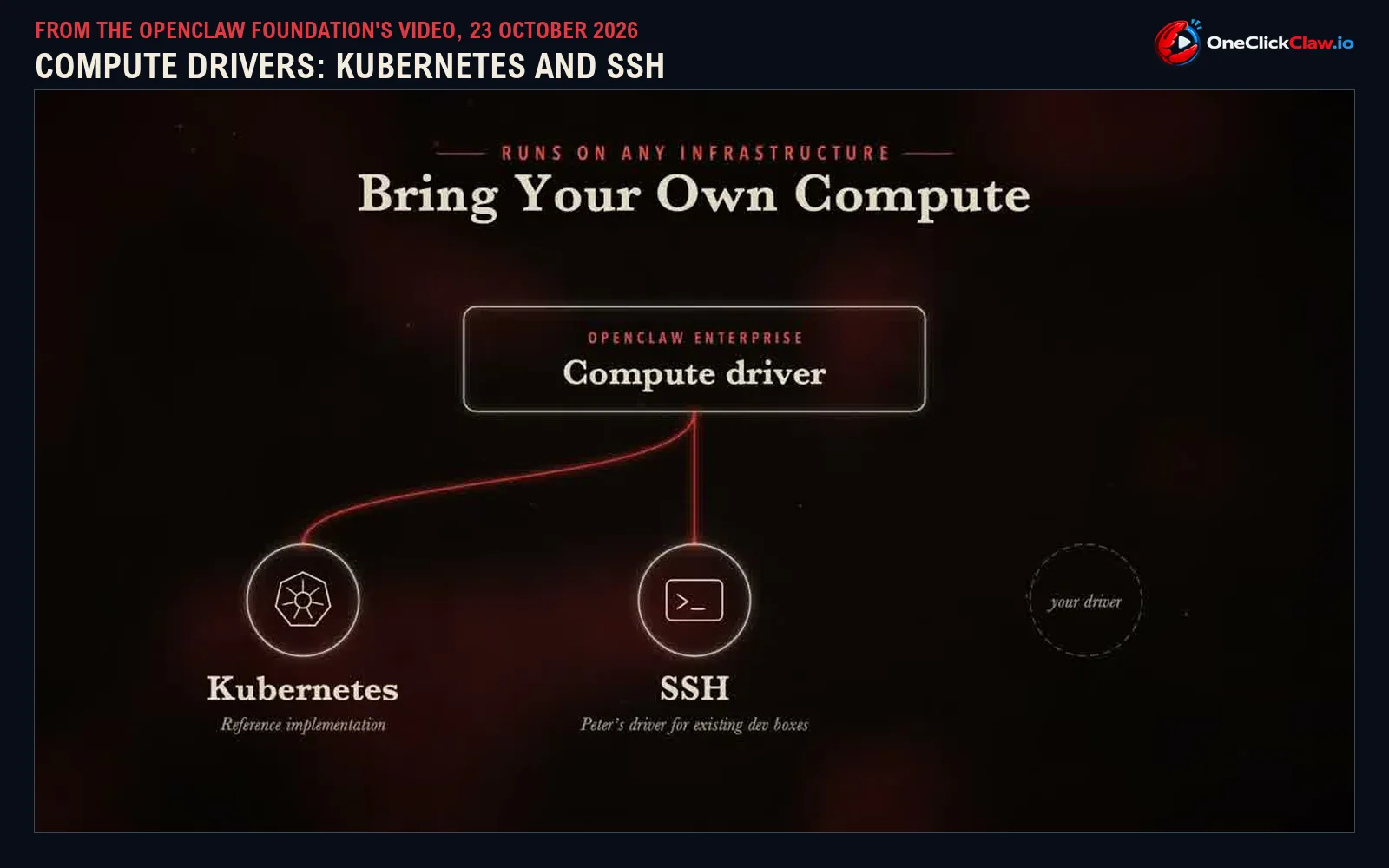
The platform launched with support for OpenAI models and Anthropic models, several agent harnesses and several integration types, Lin said. The core primitive for running agents is a "compute driver". The reference driver targets Kubernetes, "just because we think that's where a lot of enterprises will deploy", he said, and anyone can write a driver for other infrastructure.
Two drivers are listed in the drivers overview as of the 24th of October 2026. Kubernetes Compute runs embedded OpenClaw or dedicated Codex agents on a cluster. SSH Compute runs embedded OpenClaw on ordinary Linux servers with systemd, using model credentials kept on the host. Peter Steinberger, who created OpenClaw and joined OpenAI in February 2026 according to The Register, wrote the SSH driver to manage the agents he already runs on his own development machines, Lin said.
The documentation also lists NVIDIA's OpenShell as a sandbox integration. Red Hat and NVIDIA both invested in OpenShell, an agent sandbox that controls network access and processes, and both co-develop OpenClaw Enterprise, Lin said. Red Hat uses OpenClaw internally today and plans to deploy OpenClaw Enterprise to run its own agents, Joe Fernandes, vice president of Red Hat's AI business unit, wrote on the 29th of September 2026. The project is licensed under MIT and, in the words of the launch post, "will always be free for any organization to use".
Not 1.0 yet: pilots only, with company sign-in and agent identity still missing
The Foundation recommends OpenClaw Enterprise for pilot workloads today, and the launch post says a 1.0 release is planned for later in 2026. Lin listed what sits between now and 1.0: support for identity providers and single sign-on, SPIFFE and SPIRE for workload identity, mutual TLS between workloads, a contract for the emerging agent identity standards, and harder contracts for sandboxes and gateways so that every sandbox on the market can plug in, and OpenShell is one of many.
The main thing missing is data, he said. The platform runs at OpenAI, Red Hat is piloting it and a few other rollouts are under way, "an end of single-digit kind of rollouts". The team wants startups, Fortune 500 companies and different industries on it before it fixes the contracts. The goal for 1.0 is to get "80 percent of the way there" for most of them.
The code is moving fast. The repository was created on the 29th of August 2026 and held 7,703 commits and 436 stars on the 24th of October, which works out to about 137 commits a day. Its contributor list includes Lin, Steinberger and the two Red Hat engineers Lin named in the video: Sally, an OpenClaw maintainer who works at Red Hat, and Derek, a Kubernetes maintainer who, Lin said, came up with Kubernetes namespaces.
Where to start: a read-only question agent, then a coder merging a dozen pull requests a day
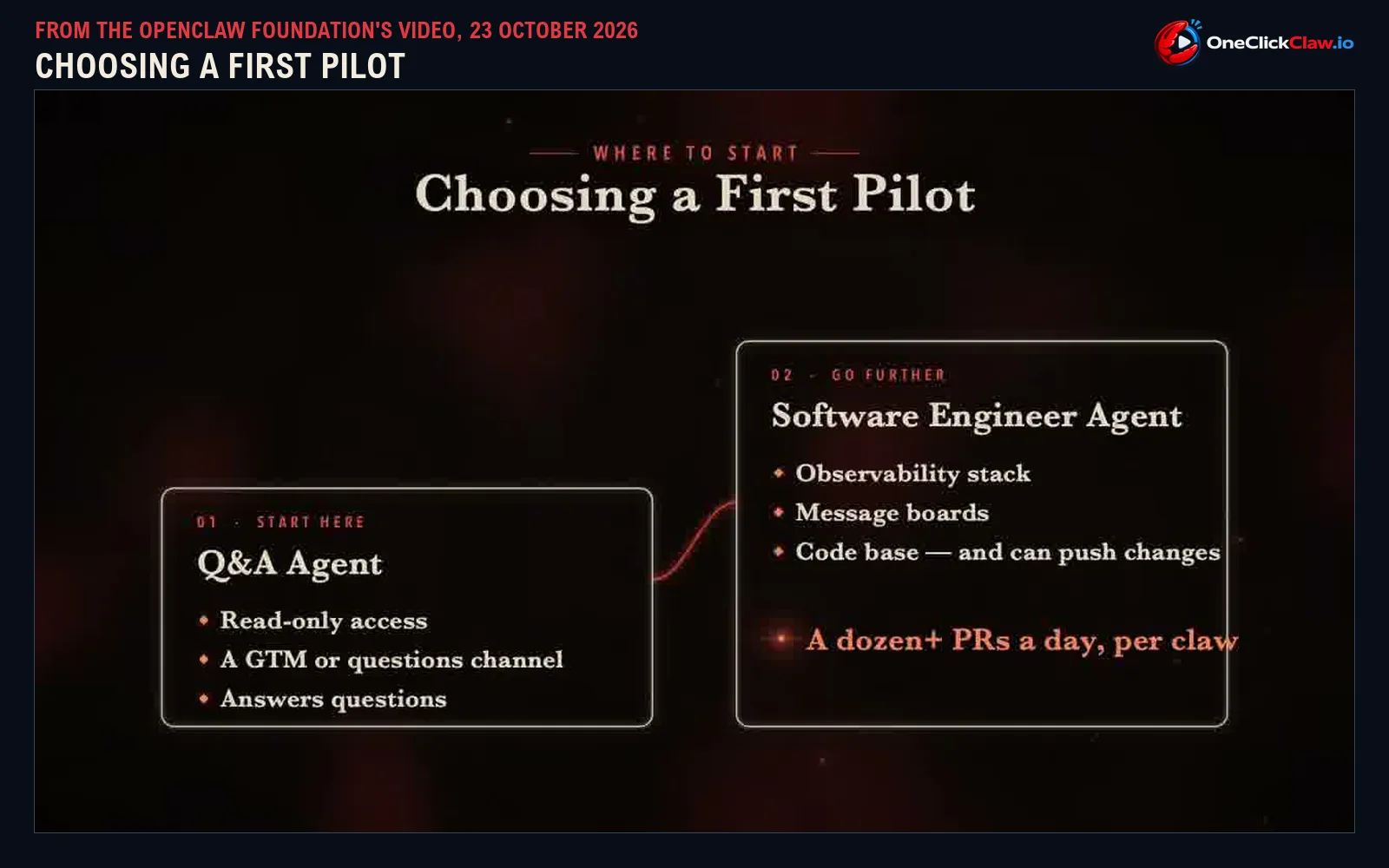
Asked which pilot to try first, Lin gave two answers. The simplest is a question-and-answer agent with read-only access: it sits in a questions channel, reads a task tracker or a codebase without write access, and answers. It shows a team the provisioning flow and the controls without risk, he said.
The most popular agent inside OpenAI is the software engineer agent, plugged into the observability stack, the message boards and the codebase, with permission to push changes. "A single claw is probably merging over a dozen PRs a day," Lin said. A pull request is a packet of code changes ready for review. If an agent needs attention now, "I get pings right away because now they're part of that core workflow," he said.
The Foundation plans a weekly call for contributors and invites companies that host infrastructure, cloud providers in particular, to get involved, Lin and McBain said at the end of the video. Lin's own picture of the future is the one Kubernetes went through: almost nobody runs it by hand, so every cloud sells a managed flavour, and he expects hosted OpenClaw Enterprise from many providers.
What this means if you run one OpenClaw agent yourself
OpenClaw Enterprise is built for teams with a Kubernetes cluster, a security department and dozens of agents to govern. The installation guide asks for Docker or Podman, k3d, kubectl, Helm, Go and Node.js before the first agent starts. For a founder, an agency or a small team with one agent on WhatsApp, Telegram or Slack, that is a different scale of problem.
The questions Lin raised still apply at that scale. Where does the agent run, who can reach it, what happens when it is left alone overnight, and who keeps the software current. That is the work OneClickClaw does for one agent at a time: a dedicated EU server per customer, SSL, firewall, updates, backups and monitoring handled, and your own API key for OpenAI, Anthropic or xAI. Every release of OpenClaw is tested on OneClickClaw's own servers before it reaches customers.
The 7-day free trial needs no credit card, and the Starter plan starts at EUR 14.99 a month at oneclickclaw.io.
Source: www.youtube.com

Helpful documentation
Want your own AI agent running without the setup? We host it on a dedicated EU server. Free for 7 days, no credit card.
Start your free trialGet notified when we publish new articles
No spam, unsubscribe anytime.
By subscribing, you agree to our Privacy Policy.