
Subscribe to our newsletter
One short email when we publish. No spam, unsubscribe anytime.
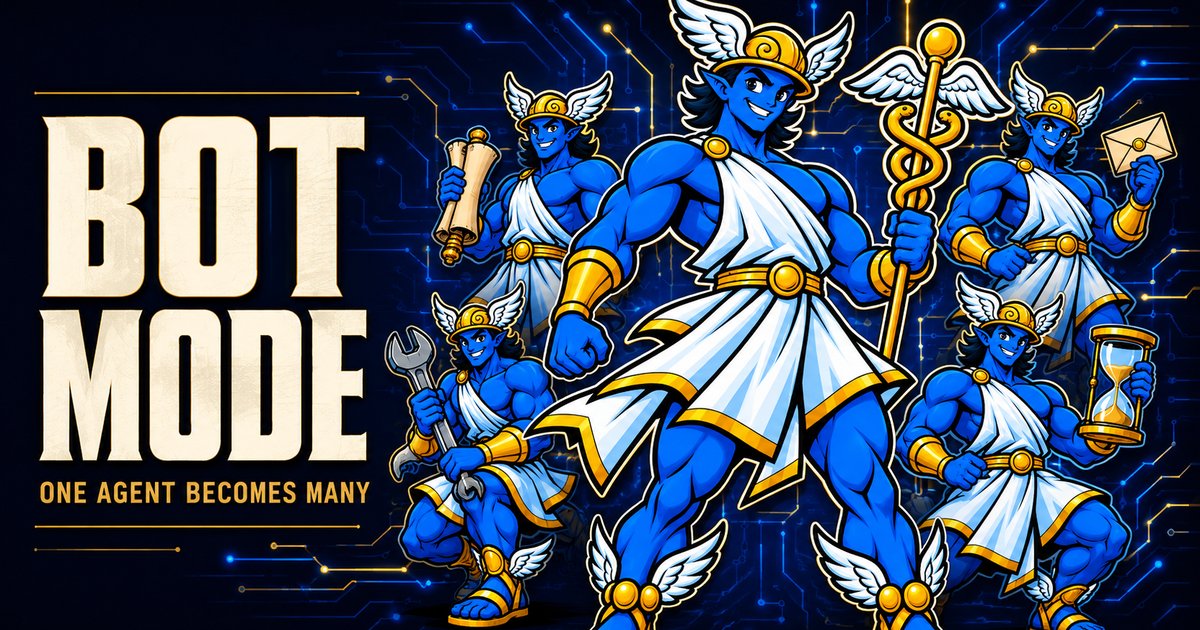
Hermes Bot Mode: One Agent Becomes Many
Until Sunday, Hermes Agent was one assistant. You opened it, you talked to it, and everything you had ever asked it lived in the same long conversation.
Since Monday it can be a dozen. Each with a name, a job, its own tools and its own schedule. You message them one at a time, the way you would message colleagues.
It is called Bot Mode, and it arrived quietly on 17 August in a change titled "bundle Bot Mode as built-in default-on plugin". It is on by default in the desktop app, so most people will find it simply by updating.
What you actually see
Your bots sit down the left. The conversation with whichever one you picked fills the middle. Their scheduled jobs sit on the right.
Setting one up takes a minute. You give it a name, a short description of what it is for, and then the part that belongs to Hermes alone: you choose which AI model powers it. A research bot on one provider, a writing bot on another, a bot running a model on your own hardware at home. They can all be different, and they can all be running at once.
If you used Hermes profiles before, this is that same idea, finally somewhere you cannot miss it.
Why splitting one agent into many makes each one better
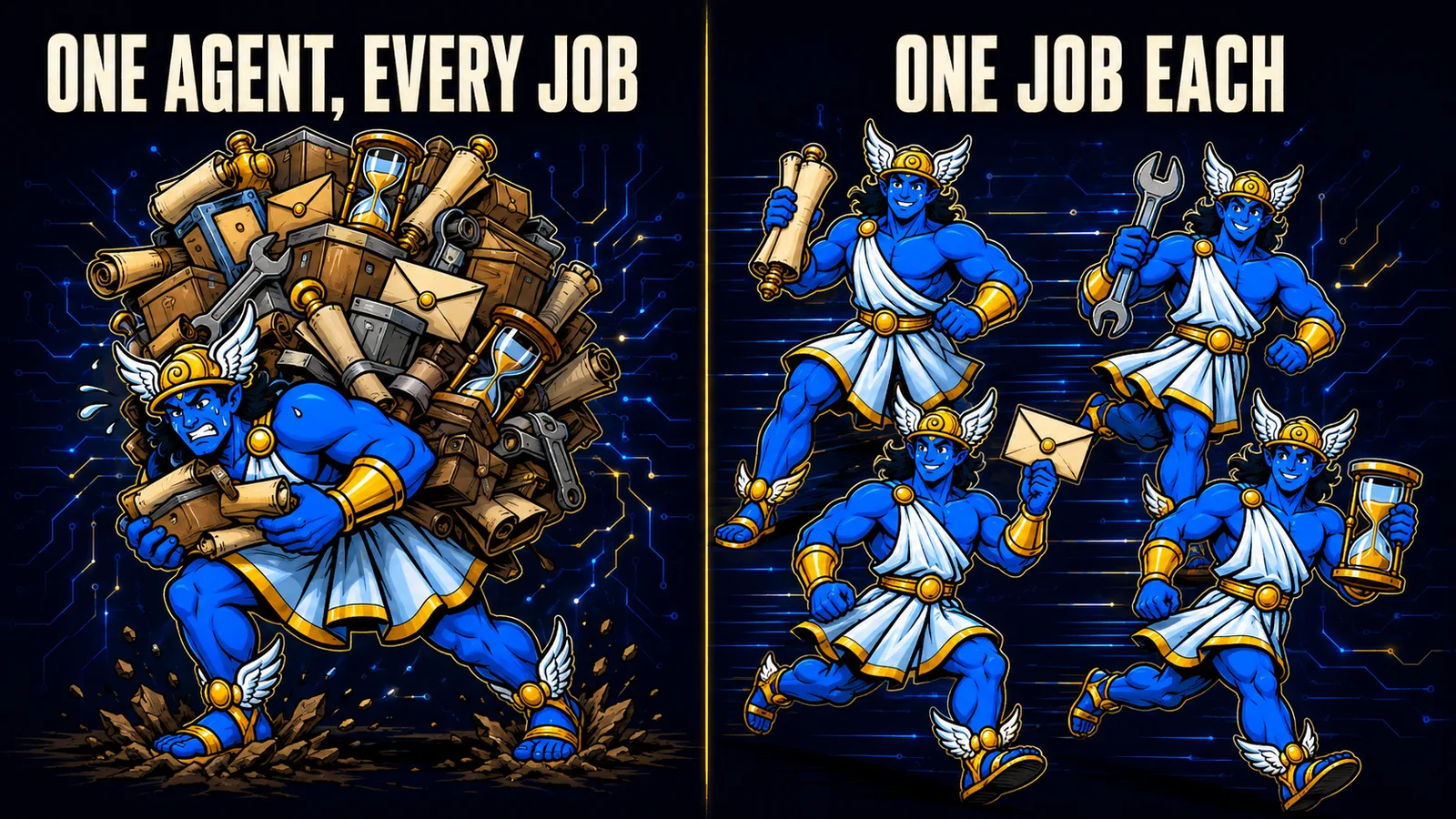
Every message you send to an AI agent drags a lot with it that you never see: its instructions, every tool it holds, every skill you installed, and the history of everything you have discussed. The model reads all of it before answering a single word.
The bigger that invisible pile gets, the slower the replies come, the more each one costs, and the more often the agent loses the thread. This is why an assistant that felt sharp in week one feels vague by week six. Nothing broke. It is simply carrying more.
Ten small bots that each do one thing carry almost nothing. Each one answers faster, costs less per message, and stays on topic, because it was never handed the other nine jobs.
What this means for you: the win is not that you get more assistants. It is that each one gets better at the single thing you gave it.
It is moving fast, which is worth knowing before you rely on it
We counted the changes rather than guessing at them. Since 16 August, 41 separate changes with Bot Mode in the title have been merged. Fourteen of those landed on 19 August alone, the day this was written.
Group chats between bots, avatars, a sidebar that remembers what you hid, chats that no longer go blank when you switch between two working bots.
What this means for you: it is genuinely useful today and it will look different next week. Update often, and expect the rough edges of something three days old.
The wider picture, in plain facts
Hermes is not alone in this. On 11 August, xAI launched Grok Bot, built on the same idea of a roster of named agents you message separately. It reaches customers through Cursor Ultra at $200 a month, Cursor Premium Teams at $120 per seat per month, and SuperGrok Heavy.
One detail in their own documentation is worth reading carefully before you plan around either product. On the page covering approvals and security, xAI writes that "All of your Bots share one cloud computer assigned to your user account", that "Files, browser sessions, and command line credentials on that computer are available across your Bot roster", and, plainly, "Do not use separate Bots as a security boundary."
Hermes takes the other road. Its bots run wherever Hermes itself is running, which for most people means the laptop in front of them, signed into their own accounts.
What this means for you: in both cases, separate bots on your screen are not separate machines underneath. If you want one job kept away from another, that separation has to come from where the agent lives, not from how many icons are in the sidebar.
What a team of bots needs to be worth having
Two things, and neither is about the software.
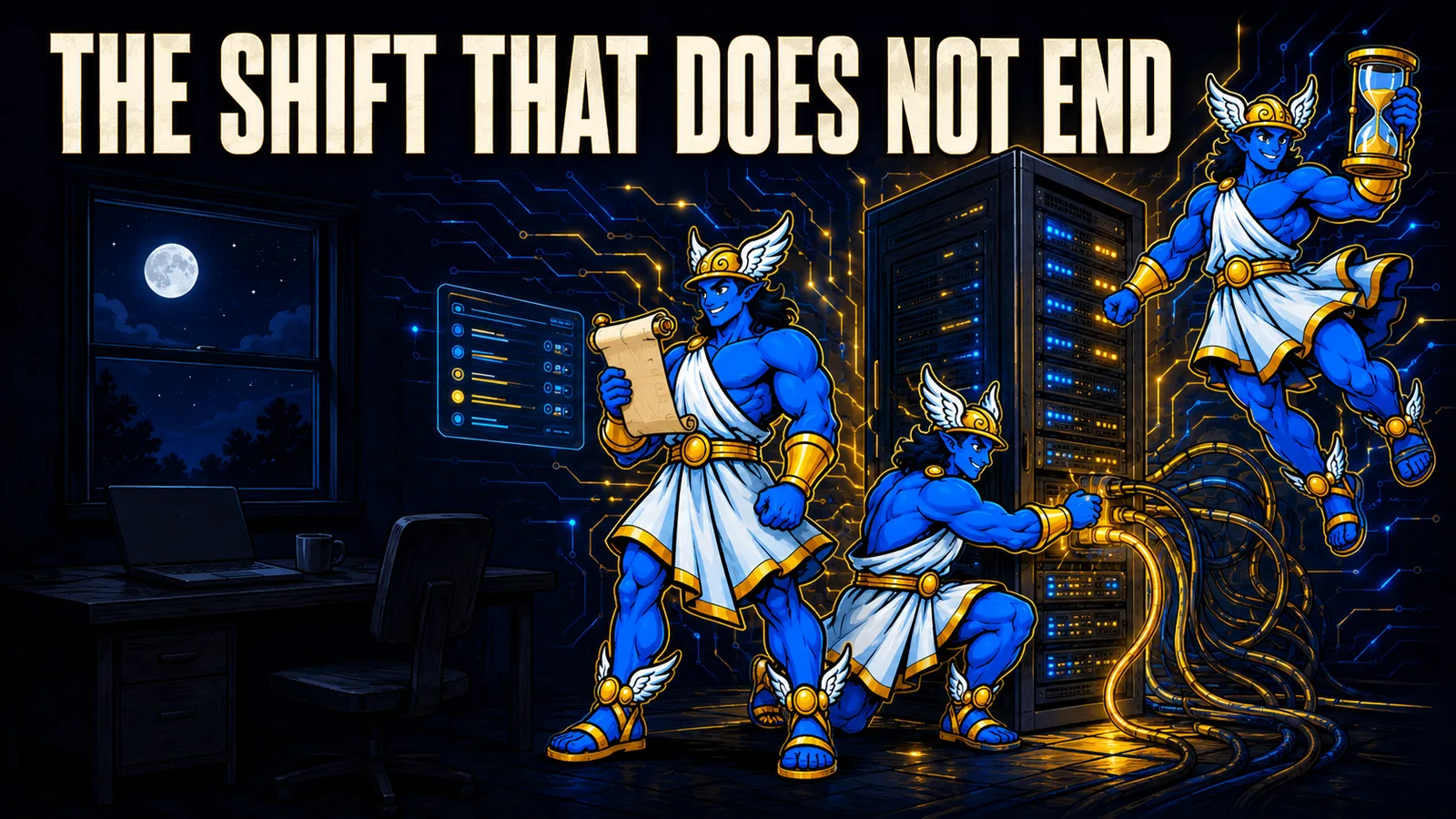
Something that stays awake. Bot Mode puts scheduled jobs on the right of the screen for a reason: the point of a research bot is that it researches while you do something else. On a laptop, closing the lid ends the shift. A bot that only works while you are watching is not a teammate, it is a window.
Somewhere that is not your own desk. An agent running on your machine, in your browser, with your accounts already signed in, can reach anything you can reach. That is fine for tinkering. It is a different conversation once a bot is running unattended overnight.
Where we come in
OneClickClaw gives your Hermes Agent its own dedicated European server, set up and managed for you. Not a share of a machine. Your own, running from the minute it is deployed and still running at four in the morning while your laptop is shut.
No installing, no keeping it patched. You pick a plan, connect the model you want, and it is live in about five minutes. Plans start at 12.49 euro a month, and every bot keeps your choice of model, including subscriptions and models you run yourself.
Want one job kept well away from another? Run a second server. Two machines, no shared sessions between them. At these prices that is a real option rather than a luxury.
Your Hermes Agent comes with a seven-day free trial. No card, just your email. That is a full week on a real dedicated server, long enough to build two or three bots and find out whether they actually take work off your hands.
Worth saying plainly
Bot Mode is a good change, and Hermes has done it in a way that keeps what makes Hermes worth using: your choice of model, on every single bot.
It is three days old, so treat it as three days old. Update often, start with two bots rather than ten, and give them somewhere to work that does not close when you shut your laptop.
Launch your Hermes Agent free for seven days and give your bots a machine that stays awake.
Where these facts came from
Bot Mode was bundled as a default-on desktop plugin in pull request 87886, merged on 17 August, and reached users in the v0.20.3 release. Every merge date and count above was read from the project's own repository rather than from a summary of it. The Grok Bot prices, launch date and the three quoted lines come from xAI's own approvals and security page.
Alex Finn's walkthrough of the new mode is the fastest way to see it working before you set it up yourself, and it is where a lot of people heard about Bot Mode first.
Since this was written, Hermes Agent has also removed the API key from the very first run. Version 0.20.5 answers with no key, no account and no card, which makes trying any of this a great deal easier.
If the idea of an agent that keeps working while you are busy elsewhere is new to you, the agent that negotiated 4,200 dollars off a car is the same argument told as a story, and it ends with its owner buying the machine to keep it awake.
Related Hermes Agent guides on OneClickClaw: Hermes Agent VPS hosting, the Hermes Agent cost guide and Hermes Agent Telegram setup.
Source: github.com
Helpful documentation
Want your own Hermes agent running without the setup? We host it on a dedicated EU server. Free for 7 days, no credit card.
Start your free trialGet notified when we publish new articles
No spam, unsubscribe anytime.
By subscribing, you agree to our Privacy Policy.