
Subscribe to our newsletter
One short email when we publish. No spam, unsubscribe anytime.
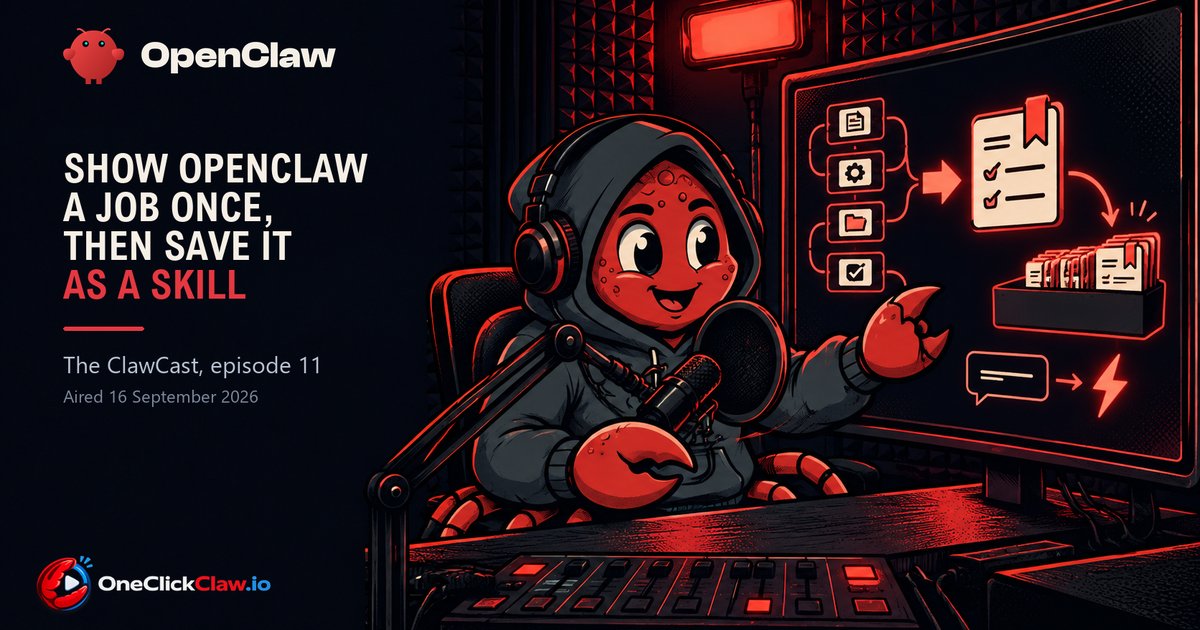
ClawCast 11: show OpenClaw a job once, then save it as a skill
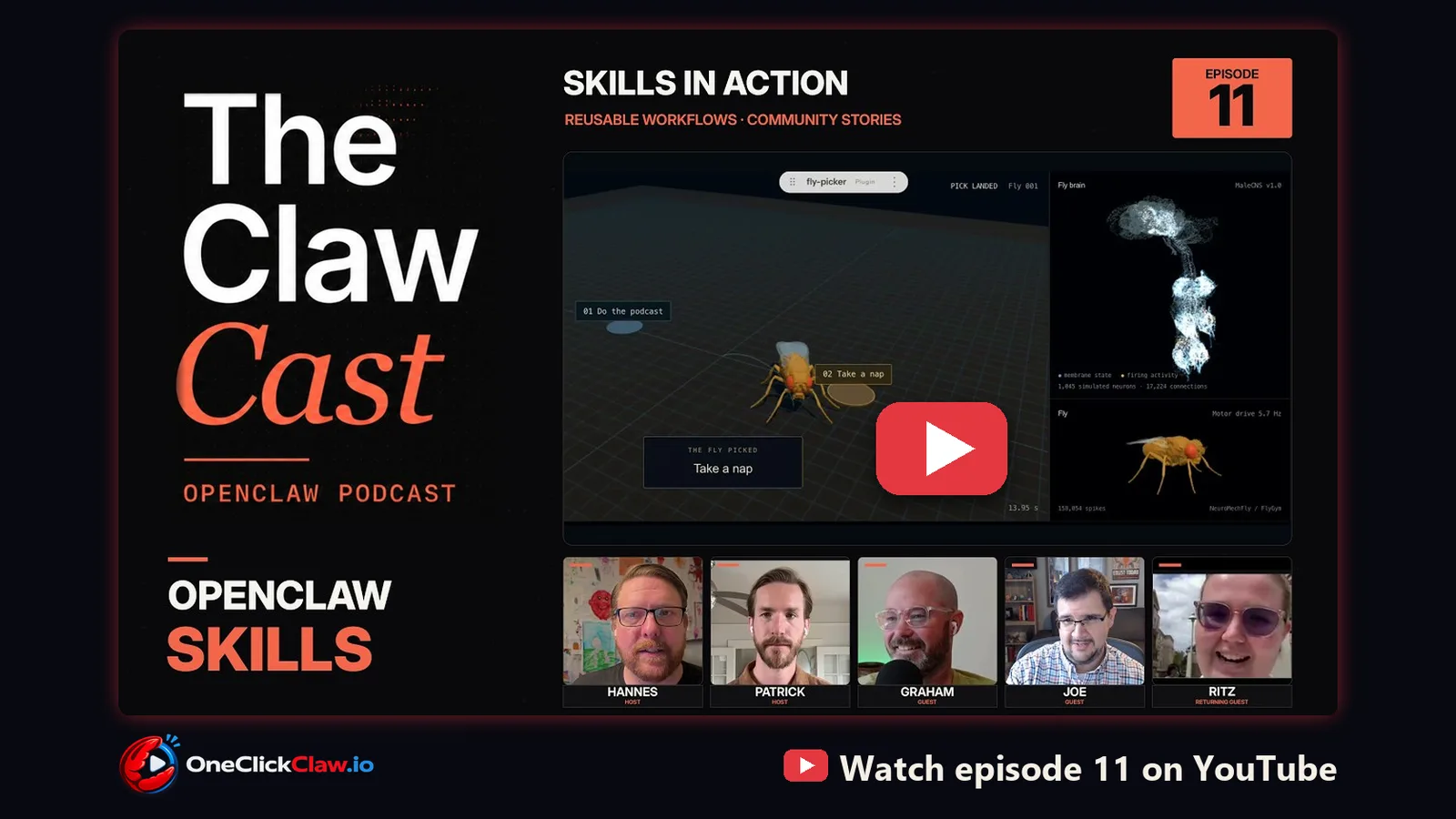
The OpenClaw Foundation published episode 11 of its weekly podcast, The ClawCast, on September 16, 2026. In the 63-minute episode, hosts Hannes Rudolph and Patrick Erichsen explained what OpenClaw skills are, and Rudolph described how he walks his agent through a job once and then asks it to save the steps as a skill. Graham McBain, of the foundation's DevRel and community team, demonstrated a skill built on a fruit fly's brain, and his teammate Joe Pishgar read out stories from OpenClaw Story Day.
What a skill is
A skill is a saved set of instructions for doing a job the way a user wants it done. Erichsen, from the foundation's technical team, said on the episode that he thinks of skills as procedural memory. His own example was a skill he and his fiancée use for grocery shopping, which records which shop they use for which items.
A plugin goes one step further, Erichsen said: it ships tools, either built in or through an MCP server, a standard connector between AI models and outside software. Plugins often contain skills too. He said a search on ClawHub, the OpenClaw marketplace, can return both a skill and a plugin for the same service.
He also pointed to Ask OpenClaw, a chat panel on the settings page. According to Erichsen, who is working on the plugin settings, a user can ask it what a plugin's tools do, how it handles security and how many installs it has.
How a skill stays light
Only the name of each skill and a short note on when to use it go into the context window, the amount of text a model can hold at once, Erichsen said. The full instructions load when a task matches. He called this progressive disclosure. It keeps a long list of skills from filling that window.
Rudolph said a list of 10 to 20 skills adds roughly 1,000 to 2,000 tokens. For users with hundreds of skills, he said, the systems are moving toward skills that can be searched, or a small helper that picks the right one at low cost.
How a repeated job becomes a skill
Rudolph said he makes more skills than he downloads. His method is to walk the agent through a task one step at a time, then ask it to make a skill from what the two of them just did. The next time, a short request is enough. After a session where he had to steer the agent back on track, he asks it to update the skill with what it learned.
He said a skill can also run on a schedule, for example a regular check of a calendar or an inbox, and that a skill can be switched off or removed by asking the agent. Erichsen said a feature called skill workshop watches conversations for procedures a user repeats.
A fly brain that picks the next task
McBain demonstrated a skill he published to mark joining the foundation. It installs a digital model of a fruit fly's nervous system on the machine where the agent runs, and lets the fly choose between two options. In the demo he offered it two choices, doing the podcast or taking a nap, and the fly's neurons lit up on screen as it chose. The episode's official thumbnail shows the result of that run: the fly picked the nap. McBain said a user who dislikes the choice can shoot the fly, and the fly then chooses again.
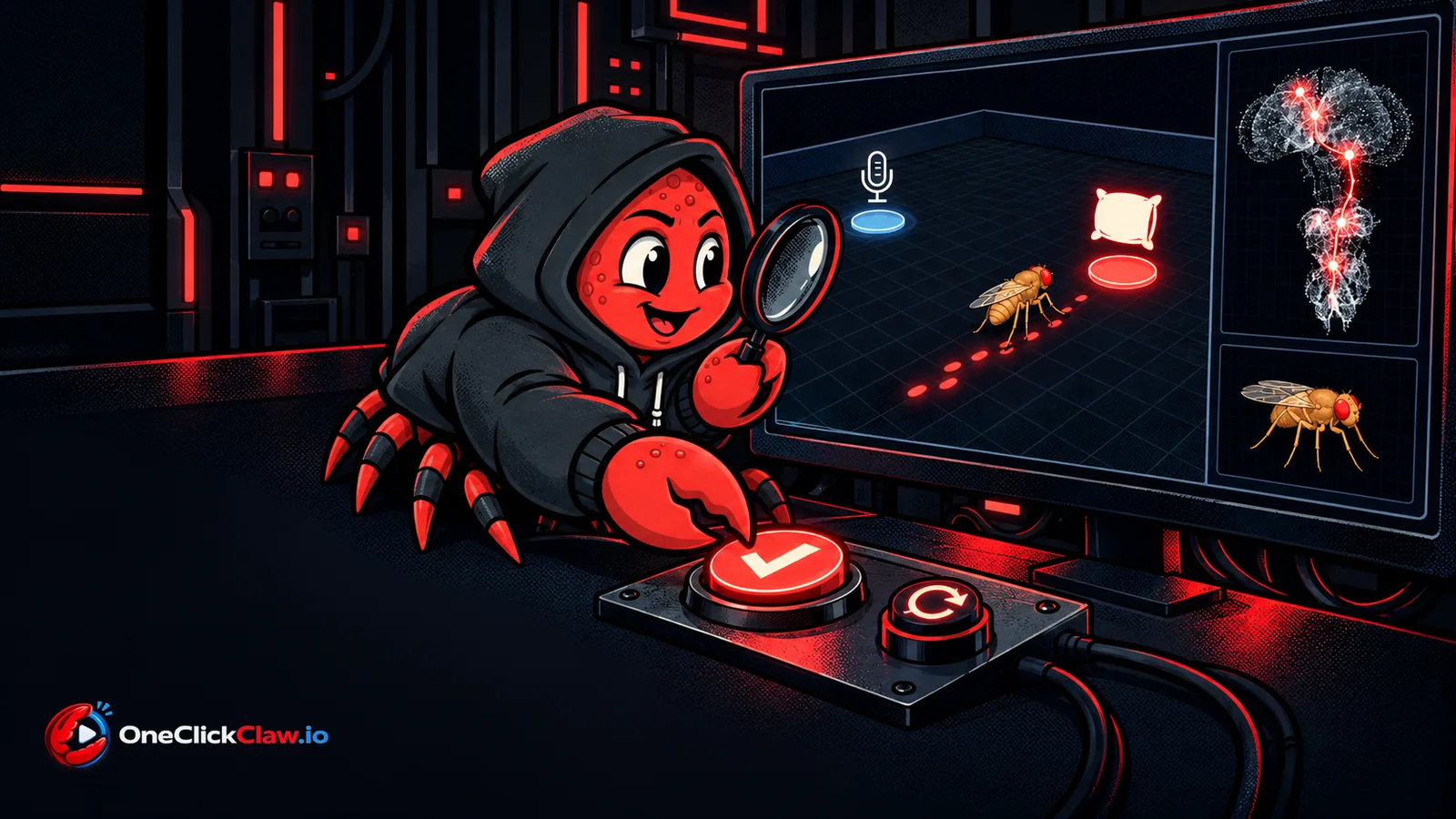
For developers, McBain said, the fly can pick one pull request from a list. After the user presses accept, the skill opens an OpenClaw session with that pull request's context already loaded.
Video editing by voice
McBain said he edited a video for the foundation by talking to his agent while watching the footage and naming each cut. The agent used MovieStar, a command line video tool that is available as a skill on ClawHub and that, McBain said, edits the files with FFmpeg. Rudolph said he used the same tool on an earlier episode to remove a stretch of dead air and to even out the audio.
What people shared on Story Day
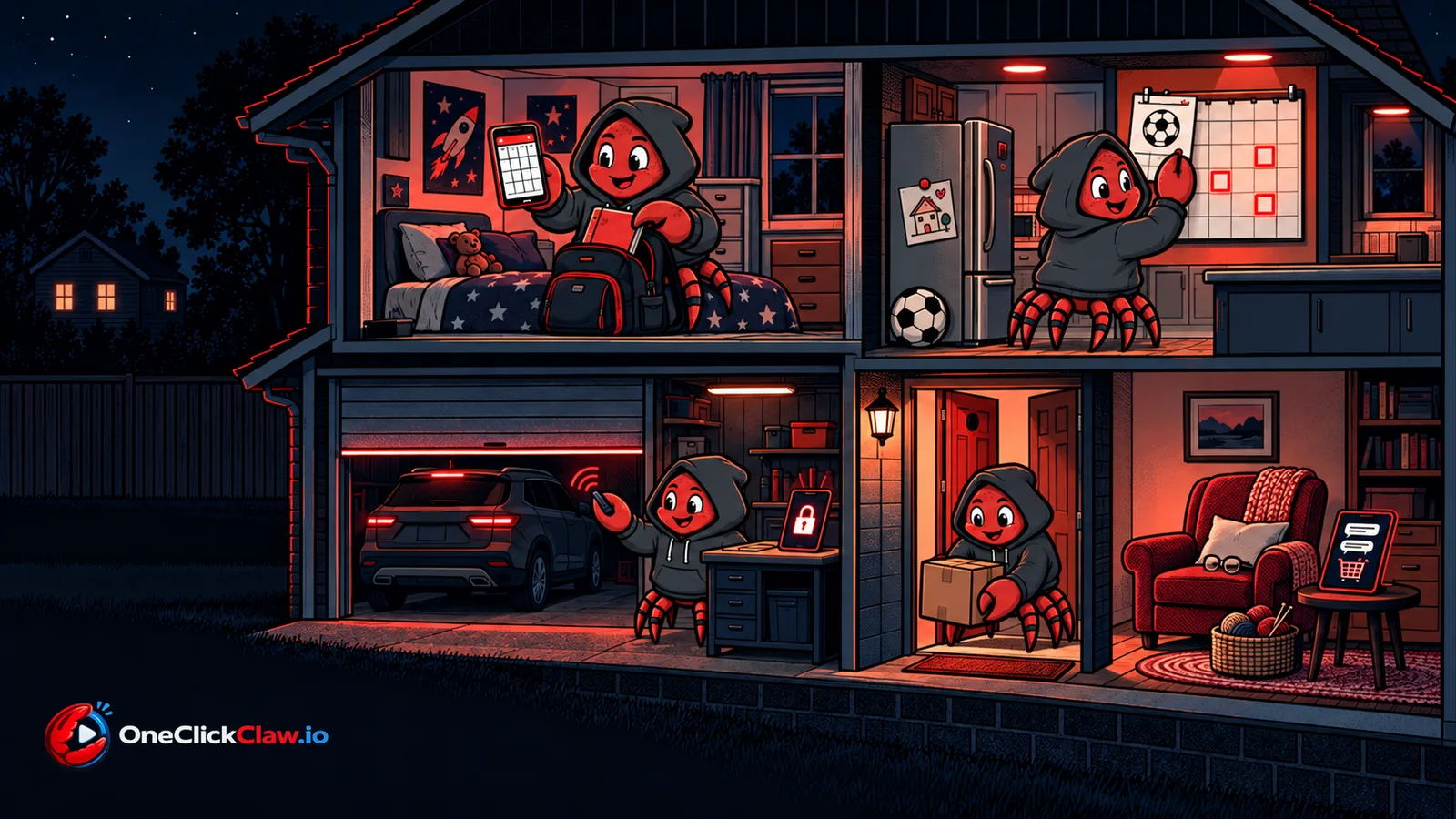
Pishgar, who said he joined the foundation about two and a half weeks before the recording, ran OpenClaw Story Day. It asked users one question: what OpenClaw actually does for them. He said the thread drew 124 posts from around 60 to 70 people. Among the examples he read on air:
- A parent whose agent reads a photo of his daughter's school timetable each night, so he knows what goes in her backpack.
- A parent who used it to sort his daughter's soccer tournament schedule into the family calendar.
- Two people who separately built the same check, which notices an open garage door and closes it.
- An ordering assistant built for a mother who found her original software hard to use.
- A private assistant built by a user with a family history of Alzheimer's, to hold on to important information.
Ritz, a guest on the previous episode, joined to describe her own post. She said her agent keeps track of her medical appointments, prepares information for her care team, finds career leads and helps with her assignments. She said that as a person with a disability she often works with 60 to 70 percent of her capacity, and that with the agent handling tasks in the background she can do what she wants to do.
Pishgar said Story Day may return once a month or every other month, and that the team plans a place where members can share how they set up their own agents.
What a scheduled skill needs
OpenClaw's documentation describes automations as its built-in scheduler, which wakes the agent at the set time. Erichsen described OpenClaw on the episode as an executive assistant that does not sleep.
Source: The ClawCast, episode 11, "OpenClaw Skills: Reusable Workflows, a Fly Brain & Community Stories", published by the OpenClaw Foundation on September 16, 2026. Episode page | Watch on YouTube
Source: openclaw.ai
Helpful documentation
Want your own AI agent running without the setup? We host it on a dedicated EU server. Free for 7 days, no credit card.
Start your free trialGet notified when we publish new articles
No spam, unsubscribe anytime.
By subscribing, you agree to our Privacy Policy.